
Ice Thickness Measurement
Direct measurement of radial ice accretion on the conductor surface.
Protect transmission lines from mechanical failure with real-time ice monitoring. Secure your assets against winter storms with continuous, on-wire visibility
Our units are engineered for the harsh reality of winter. Unlike battery-limited drones that cannot fly in storms, the Nomadic platform grips the wire physically, allowing it to monitor ice growth continuously without expending flight energy.
Data is transmitted instantly to the Nomadic Dashboard. Operators receive automated alerts when sag thresholds are breached, enabling rapid decisions on de-icing protocols or load shedding.

Direct measurement of radial ice accretion on the conductor surface.
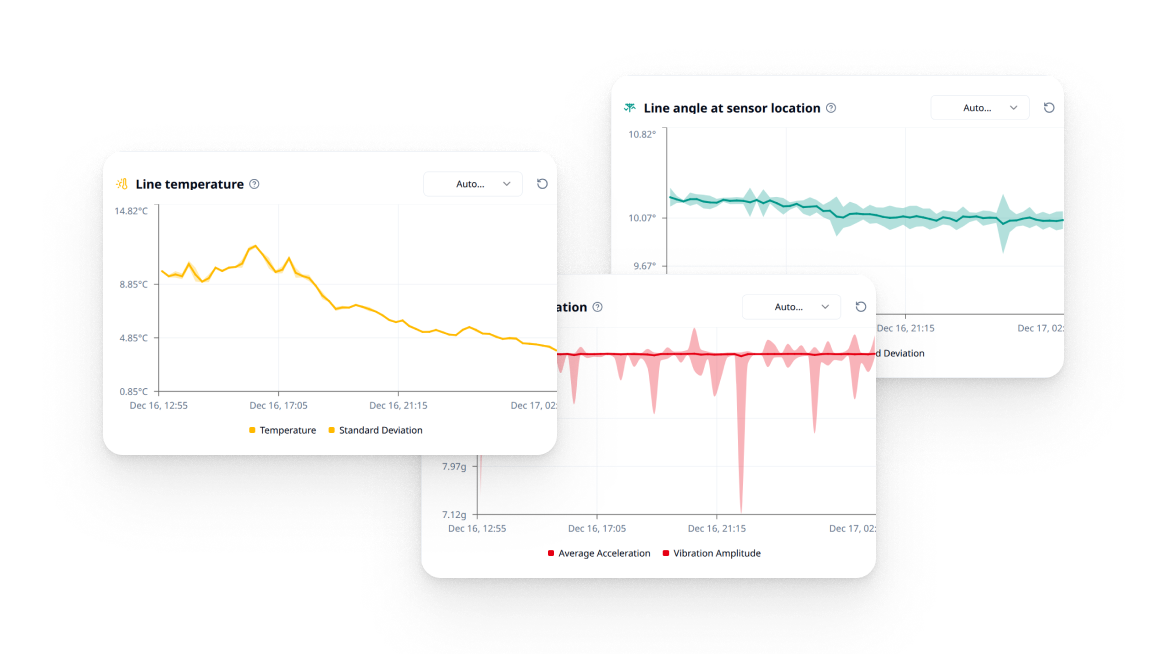
Sag changes indicate ice loading before visual detection is possible.
Vibration patterns that precede dangerous conductor galloping detected early.
Tested and proven in Norwegian winter conditions with Elvia, Norway's largest DSO.
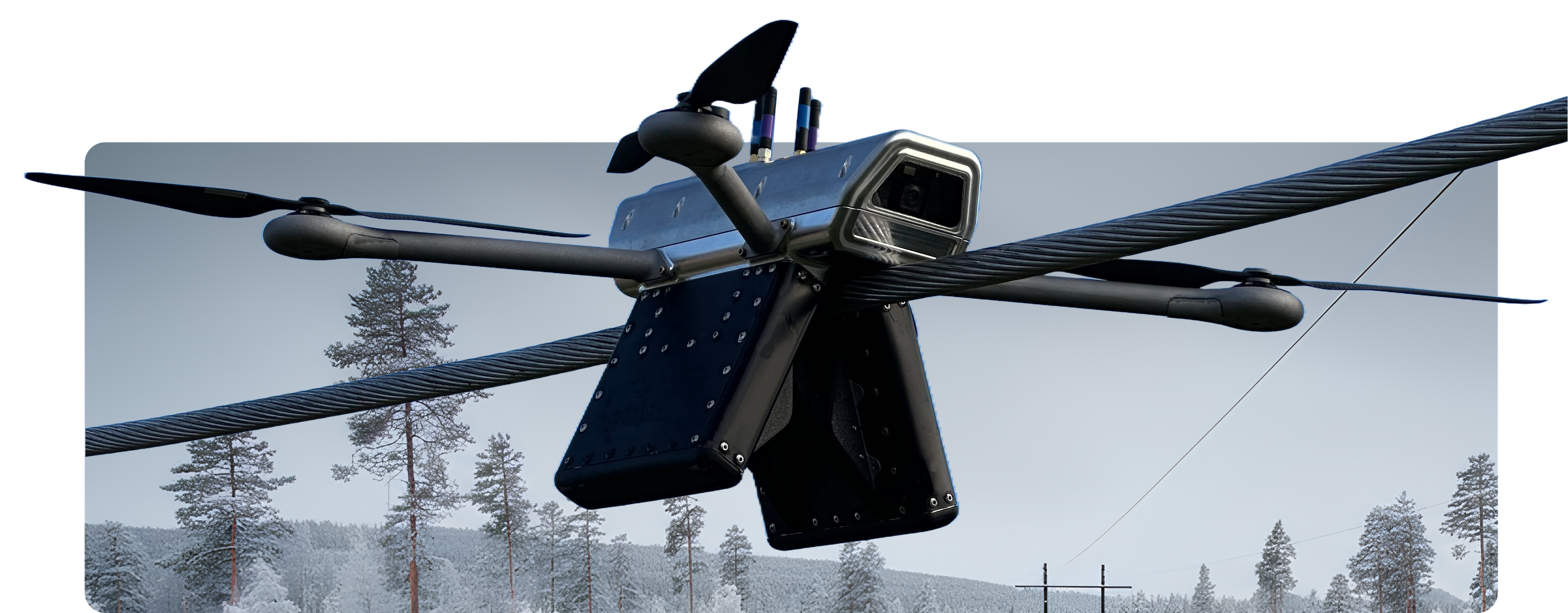
Ice accretion is a silent destroyer of transmission infrastructure, leading to tower collapse andgalloping lines. Traditional visual inspections are impossible during severe storms, and loadcells only measure tension at the tower, missing critical mid-span sag data.
Nomadic Drones provide a continuous monitoring system that requires no external power. Ourdrone lands on the conductor, locks in, and charges from the line’s field, ensuring sustained operations in sub-zero conditions.
Pilot deploys drone on power line in 5 minutes by flying above power line
Drone sits on power line for extended time monitoring line conditions
Relevant team members are notified as soon as relevant events have occured
With visual verification from the drone the team can start mitigation
We don't just guess ice weight, we measure the physical response of the conductor. By tracking the rate of sag increase and vibration frequency changes, we provide early warnings before ice loads exceedstructural design limits.
.png)
Validated in harsh Norwegian winter environments, reaching -25°C, the platform is shielded against freezing rain and high winds. The physical locking mechanism ensures the sensor remains stable and operational when you need it most.


.svg)
.svg)
.svg)
.svg)